Commercial property owners and facility managers in Modesto face a critical decision that impacts their bottom line more than almost any other building system. The choice between scheduled commercial roofing maintenance and reactive repairs determines whether you spend thousands or tens of thousands on your roof over its lifetime. Understanding how deferred maintenance compounds into major expenses helps property managers make informed decisions that protect both their buildings and budgets.
What Happens When Roofs Aren’t Maintained
Neglecting routine maintenance sets off a predictable chain reaction that accelerates roof deterioration. Small issues that could be addressed during a scheduled inspection evolve into systemic failures requiring emergency intervention. Water intrusion begins at vulnerable points like penetrations, seams, or compromised flashings, then spreads through the roof assembly as moisture migrates between layers. This hidden deterioration often remains invisible until interior damage appears, by which point repair costs have multiplied significantly beyond what preventative maintenance would have required.
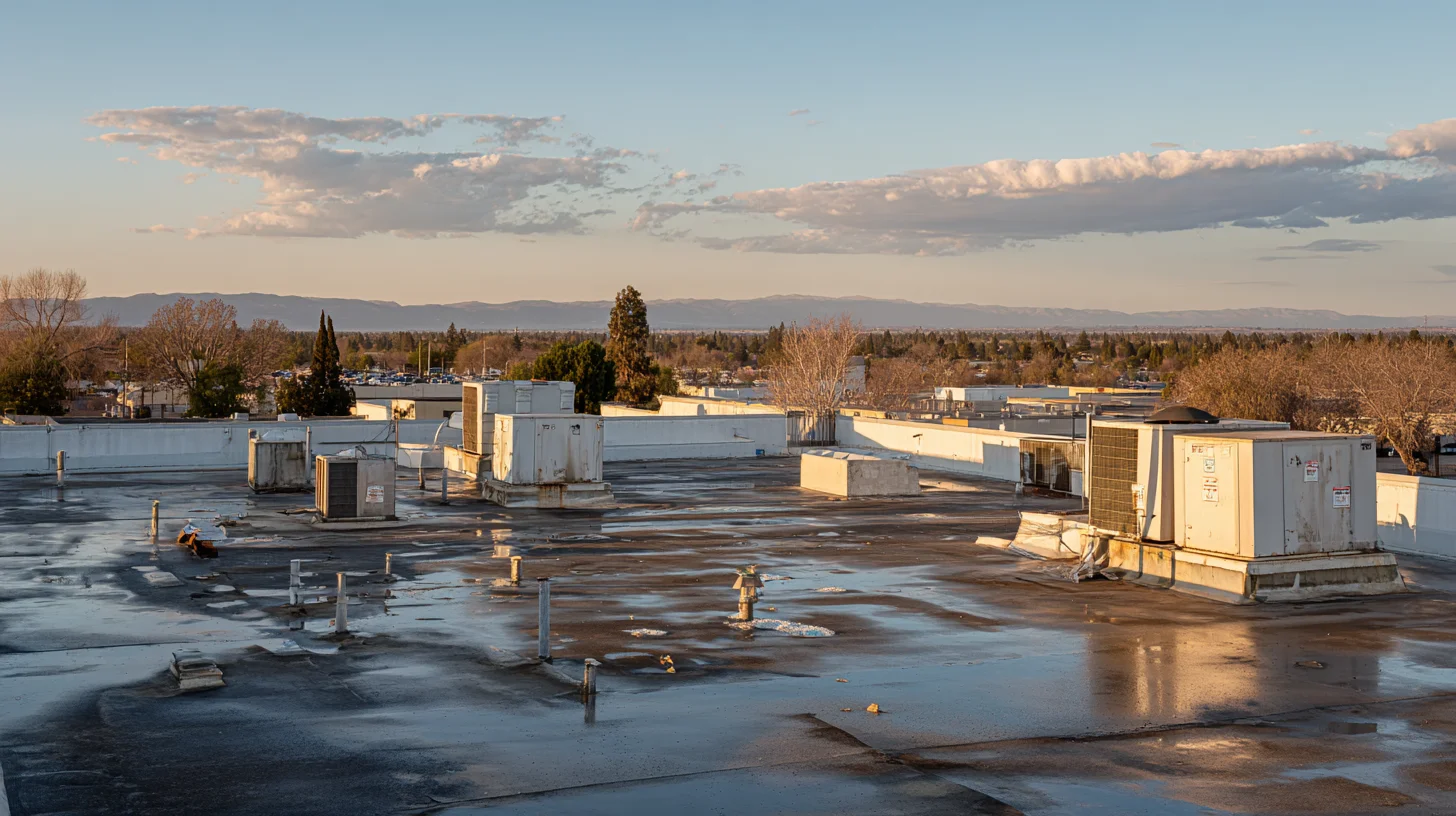
The membrane itself degrades faster without regular attention, particularly under Central Valley conditions where intense UV exposure and thermal cycling stress roofing materials year-round. Ponding water areas expand as drains become clogged with debris, creating additional stress points that compromise the roof structure. Fasteners work loose, seams separate, and protective coatings deteriorate at accelerated rates when maintenance programs aren’t in place. According to industry research from facilities management experts, for every dollar saved by deferring maintenance, there comes a four dollar increase in future capital renewal costs, with some complex scenarios reaching 15 times the original repair cost when cascading failures occur.
The progression from minor to major damage follows a consistent pattern across commercial buildings. A small membrane crack that could be sealed during routine maintenance allows water into the insulation layer, where it reduces thermal performance and adds weight to the roof assembly. This additional weight stresses the roof deck, while the wet insulation promotes microbial growth and accelerates the deterioration of surrounding materials. What begins as a simple repair need becomes a section replacement project, then potentially a full roof replacement if neglected long enough. Roof repairs and maintenance performed proactively interrupt this damage progression before costs escalate beyond control.
Early Warning Signs Maintenance Catches
Professional maintenance programs identify developing problems during their early stages when intervention costs remain minimal. Trained technicians spot membrane blistering, surface cracking, and seam deterioration before these conditions allow water intrusion into the building. They catch fastener back-out, edge metal separation, and flashing gaps that property managers typically cannot see from ground level. These early indicators signal that corrective action will prevent more serious damage if addressed promptly.
Drainage system evaluation during scheduled maintenance reveals accumulating debris, slow-draining areas, and developing low spots that will eventually cause ponding water. Maintenance inspectors identify biological growth, surface erosion, and coating degradation that compromise membrane integrity over time. They document equipment vibration damage, foot traffic wear patterns, and penetration seal deterioration around HVAC units and other rooftop equipment before these conditions create leak pathways. The National Roofing Contractors Association emphasizes that regular maintenance extends a commercial roof’s lifespan by up to 50 percent when issues are addressed at this preventative stage.
Thermal imaging and moisture scanning technologies employed during thorough maintenance inspections detect trapped moisture within the roof assembly that remains invisible during visual inspections alone. These diagnostic tools locate saturated insulation, identify active leak paths, and map areas requiring intervention before interior damage occurs. Early detection allows targeted repairs that address specific problem areas rather than requiring extensive roof section replacement. The documentation provided through regular maintenance creates a historical record that tracks roof condition over time, enabling accurate forecasting of future repair needs and replacement timing.
Storm Damage and Deferred Maintenance
Central Valley weather patterns create specific challenges for commercial roofs that inadequately maintained systems cannot withstand. Winter storms bring heavy rainfall that overwhelms clogged drainage systems, creating ponding conditions that stress membrane seams and accelerate deterioration. High winds lift membrane edges at areas where fasteners have worked loose or where edge metal has separated from its substrate. Debris accumulation from surrounding trees and vegetation becomes projectile hazards during wind events when regular cleaning hasn’t been performed.
The interaction between storm damage and existing maintenance deficiencies amplifies repair costs significantly. A roof system in good condition typically sustains minimal damage from normal storm events, while a neglected roof experiences multiple failure points during the same weather conditions. Insurance claims become more complicated when evidence suggests that deferred maintenance contributed to storm damage, potentially limiting coverage or resulting in claim denials. Property managers face difficult conversations with insurers when documentation shows that recommended maintenance was not performed prior to a damage event.
Summer conditions in Modesto present different but equally challenging scenarios for unmaintained roofs. Extreme heat causes rapid thermal expansion of roofing materials, stressing seams and fasteners throughout the membrane assembly. UV radiation degrades protective coatings and membrane surfaces at accelerated rates when reflective properties have diminished due to dirt accumulation and weathering. The thermal cycling between daytime heat and nighttime cooling creates stress patterns that exploit existing weaknesses in the roof system. Seasonal roofing services specifically address these weather-related challenges through proactive preparation that reduces storm damage risk and extends membrane lifespan under harsh conditions.
Real-World Cost Comparisons
The financial impact of maintenance decisions becomes clear when comparing actual project costs over a roof’s service life. A comprehensive annual maintenance program for a 20,000 square foot commercial building typically costs $2,000 to $4,000, including semi-annual inspections, drain cleaning, minor repairs, and detailed reporting. Over a 20-year roof lifespan, this represents an investment of $40,000 to $80,000 in preventative care that extends the roof’s functional life and maintains its weather-tight integrity.
Compare this to the reactive approach where no scheduled maintenance occurs until problems manifest as interior leaks or visible damage. The first emergency repair might cost $5,000 to address immediate leak sources, followed by another $8,000 six months later when additional failures occur. Interior damage from water intrusion adds $15,000 for ceiling tile replacement, paint repairs, and content remediation. Within five years, cumulative emergency repairs often exceed $50,000, yet the roof system remains compromised and continues requiring frequent intervention. The pattern accelerates as the roof ages without proper care, leading to premature replacement at 12 to 15 years instead of achieving the expected 20 to 25-year service life.
Complete roof replacement costs for that same 20,000 square foot building range from $240,000 to $300,000 depending on the system selected and existing deck conditions. When maintenance extends roof life by just five years, the avoided replacement cost alone exceeds $60,000 in present value terms, far surpassing the total investment in preventative maintenance. The calculation becomes even more favorable when factoring in avoided emergency repairs, reduced insurance claims, and eliminated business disruption from sudden roof failures. Professional roof inspections and reporting provide the documentation needed to justify maintenance budgets to stakeholders who question the value of preventative spending.
How Maintenance Reduces Emergency Calls
Emergency roofing situations create cascading problems beyond the immediate repair costs. After-hours service calls command premium rates, often double or triple standard service pricing for urgent leak response. Contractors mobilize crews on short notice, interrupt other scheduled work, and expedite material procurement to address crisis situations. The property owner pays for this urgency while dealing with interior damage, business disruption, and potential tenant complaints or revenue loss.
Scheduled maintenance programs eliminate most emergency scenarios through systematic problem identification and resolution. Minor issues addressed during planned service visits never escalate into urgent failures requiring immediate attention. Drainage systems that receive regular cleaning don’t overflow during rainstorms, membrane seams repaired proactively don’t separate during high winds, and flashings maintained properly don’t allow water intrusion around penetrations. The predictability of scheduled service allows property managers to budget accurately and coordinate work during off-hours when business disruption is minimal.
The operational advantages extend beyond cost savings to include improved tenant relations, reduced liability exposure, and enhanced building value. Tenants in well-maintained buildings experience fewer disruptions, no water damage incidents, and consistent environmental comfort. Property managers avoid the stress and reputation damage that comes with emergency situations, while building owners maintain asset values through demonstrated care of major building systems. Studies from facilities management research indicate that proper preventive maintenance programs deliver a 545 percent return on investment over a 25-year period, worth approximately 33 cents per square foot annually compared to reactive maintenance approaches.
Long-Term Structural Risks
Water intrusion that originates from roof system failures creates structural damage that extends far beyond the roofing assembly itself. Moisture that penetrates into the building envelope saturates roof decking, causing wood deterioration and metal corrosion that compromises structural integrity. Steel roof deck systems develop rust that weakens load-bearing capacity, while wood deck systems experience rot that necessitates costly replacement during roof restoration projects. The structural framing supporting the roof deck can also suffer damage when water intrusion continues unchecked over extended periods.
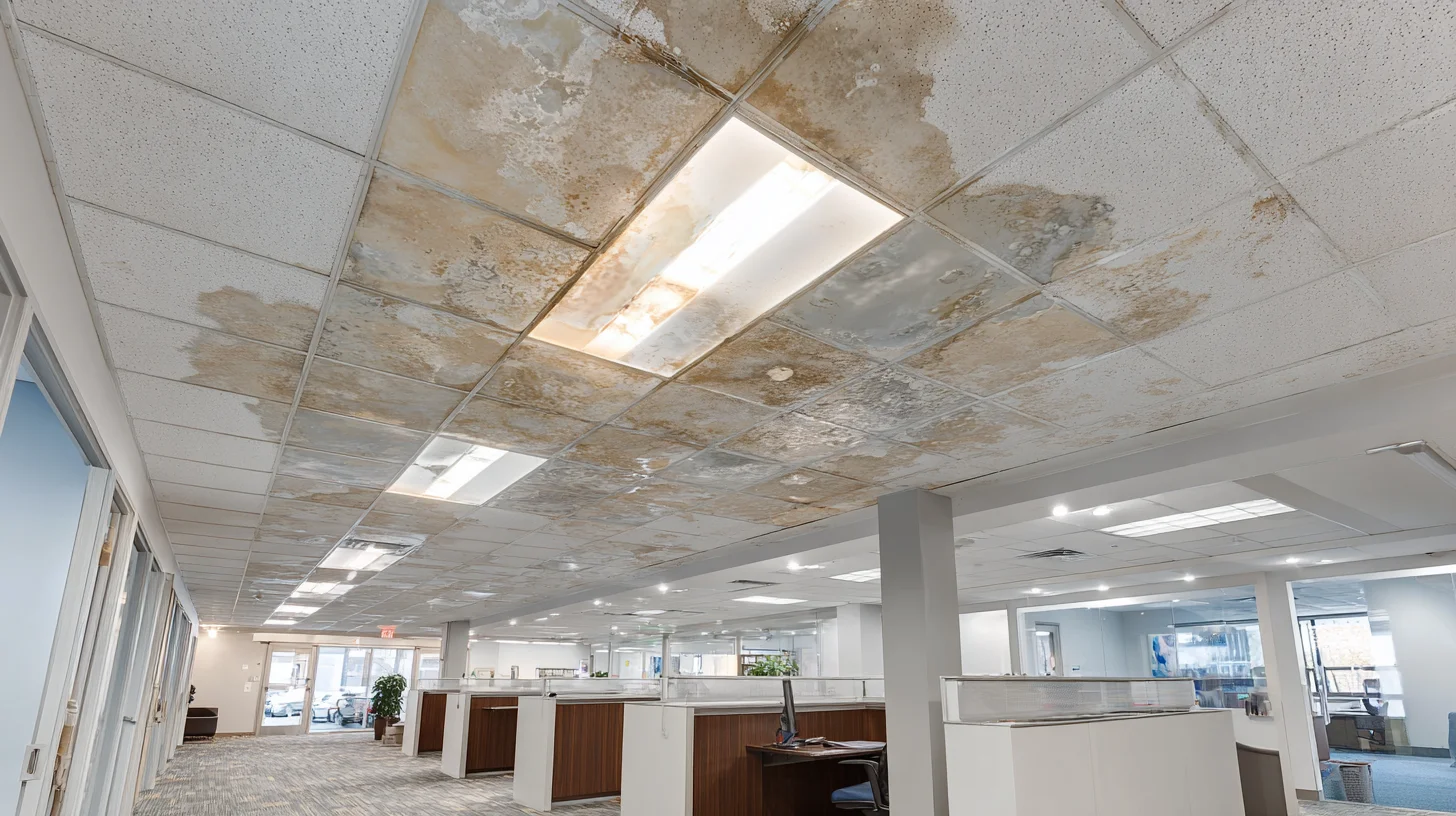
Interior building components suffer cascading damage as water migrates downward through the structure. Ceiling systems require replacement after water damage compromises their appearance and structural integrity, while insulation materials lose thermal performance and may require removal if contaminated with mold growth. Electrical systems and lighting fixtures exposed to water intrusion create safety hazards requiring immediate attention and replacement. The cumulative cost of addressing these secondary damage issues often exceeds the cost of the original roof repair by factors of three to five times.
Building code compliance becomes complicated when structural damage from deferred maintenance is discovered during eventual repair work. Bringing a compromised structure back to code requirements may trigger additional modifications beyond the roof system itself, significantly expanding project scope and cost. Local building departments may require structural engineering evaluations, extensive repairs to load-bearing members, and upgrades to current code standards when significant deterioration is found. These complications can transform a roof replacement project into a comprehensive building renovation costing two to three times the original estimate. Roof coatings and restoration services can address moderate deterioration before it progresses to structural damage requiring extensive remediation.
How much does emergency roof repair cost compared to planned maintenance?
Emergency roof repairs typically cost 200 to 300 percent more than the same work performed during scheduled maintenance due to premium labor rates, expedited material procurement, and after-hours service charges. A minor repair that might cost $500 during a planned maintenance visit could easily exceed $1,500 when performed as an emergency call-out. Over time, this cost difference compounds as more emergency situations develop in unmaintained roofs, creating a pattern where reactive spending far exceeds what comprehensive maintenance programs would have required.
What building systems are most affected by roof leaks?
Roof leaks impact electrical systems through water damage to wiring, panels, and fixtures that create both safety hazards and replacement costs. HVAC equipment and ductwork suffer corrosion and efficiency loss when exposed to moisture intrusion. Interior finishes including drywall, paint, ceiling tiles, and flooring require replacement after water damage. Insulation materials lose thermal performance and may harbor mold growth requiring removal. Structural components like roof decking and framing deteriorate when moisture penetrates the building envelope. The cascading damage to these interconnected systems often costs three to five times more than addressing the original roof issue would have required.
How long does it take for small roof problems to become major issues?
The progression from minor to major roof problems varies based on climate conditions, roof type, and problem severity, but typically occurs within six to eighteen months in Modesto’s environment. A small membrane crack can allow enough water intrusion to saturate insulation within a single winter season, while deteriorated flashing might cause gradual damage over multiple years. Ponding water conditions accelerate membrane deterioration, potentially creating leaks within months of drainage system failure. The key factor is that this progression is largely invisible until interior damage appears, by which point repair costs have multiplied significantly.
Does deferred roof maintenance affect property insurance?
Insurance carriers increasingly scrutinize maintenance records when processing roof-related claims, particularly for older roof systems where documentation of regular maintenance demonstrates responsible ownership. Claims may be denied or coverage limited when evidence suggests that deferred maintenance contributed to damage rather than a covered peril like wind or hail. Some commercial property policies specifically require regular roof inspections and maintenance as conditions of coverage. Property managers should maintain detailed records of all roof maintenance activities and inspections to support potential future insurance claims.
What is the typical lifespan difference between maintained and unmaintained roofs?
Commercial roof systems receiving regular professional maintenance typically achieve or exceed their expected service life of 20 to 25 years, with some well-maintained systems lasting 30 years or more. Unmaintained roofs often require replacement at 12 to 15 years due to accumulated damage and deteriorated conditions that cannot be economically repaired. This difference represents significant financial impact, as replacing a roof five to ten years early eliminates the remaining useful life value and requires major capital expenditure ahead of budget planning. The cost of that premature replacement almost always exceeds the total investment that comprehensive maintenance would have required over the roof’s full expected lifespan.
Conclusion
The evidence overwhelmingly supports scheduled commercial roof maintenance as a cost-effective strategy that protects building assets and reduces long-term expenses. Property managers in Modesto who invest in comprehensive maintenance programs avoid the exponentially higher costs associated with deferred care, emergency repairs, and premature roof replacement. The choice between preventative maintenance and reactive repairs determines not just immediate costs, but long-term building performance, tenant satisfaction, and asset value preservation.
Highly Favored Roofing Modesto serves commercial and residential properties throughout Modesto with professional roofing services backed by California contractor license 1130391. Our maintenance programs protect your investment through systematic inspections, proactive repairs, and detailed reporting that supports informed decision-making. Request a free quote to discuss how scheduled maintenance can extend your roof’s lifespan and reduce your total ownership costs.
For more information about roofing services at Highly Favored Roofing Modesto, check them out below: