Property managers in Modesto and Tracy face unique commercial roofing challenges that require a strategic maintenance approach. The Central Valley’s extreme temperature swings, intense summer heat, and seasonal winter storms place significant stress on commercial roofing systems throughout the year. Without a structured maintenance program, these environmental factors accelerate membrane deterioration, drainage failures, and costly emergency repairs that disrupt business operations and strain capital budgets. A comprehensive commercial roof maintenance program addresses these regional challenges while extending roof lifespan, protecting warranty coverage, and providing property managers with the documentation needed for accurate budget forecasting and stakeholder communication.
Why Commercial Roof Maintenance Is Critical in the Central Valley
Commercial roofing systems in Modesto operate under some of California’s most demanding climate conditions. The region experiences summer temperatures regularly exceeding 95 degrees Fahrenheit, combined with intense ultraviolet radiation that degrades roofing membranes over time. Winter brings heavy rainfall and occasional wind events that test drainage systems and flashings. Property managers who implement proactive maintenance programs protect their buildings from these climate-specific risks while avoiding the substantially higher costs associated with reactive repair approaches.
Heat, UV Exposure, and Membrane Stress
Central Valley summers subject commercial roofs to extreme thermal stress that most other California regions do not experience at the same intensity. Flat and low-slope roofing systems absorb tremendous heat during prolonged periods of temperatures exceeding 100 degrees, causing membranes to expand and contract daily. This thermal cycling weakens seams, stresses penetration seals, and accelerates the aging process of TPO, PVC, and modified bitumen systems. UV radiation breaks down the chemical bonds in roofing membranes, particularly affecting the reflective properties that help buildings maintain energy efficiency. Regular maintenance inspections identify early signs of UV degradation, such as surface chalking or color changes, allowing property managers to address issues before membrane failure occurs. California’s Title 24 energy standards require commercial roofs to maintain specific reflectivity levels, making UV protection and surface condition monitoring essential components of any maintenance program.
Winter Storms and Drainage Risks
While Modesto winters are milder than many regions, the area receives concentrated rainfall that challenges commercial roof drainage systems. Low-slope roofs rely entirely on properly functioning drains, scuppers, and gutters to remove water before structural loading or membrane saturation occurs. Winter storms deposit debris that blocks drainage pathways, creating conditions for ponding water that stresses roof structures and provides entry points for leaks. Property managers who maintain regular inspection and cleaning schedules prevent these drainage failures before they compromise building interiors or require emergency response. Wind events associated with winter weather systems can lift membrane edges, damage flashings, and dislodge rooftop equipment if proper securement and maintenance protocols are not followed.
What a Commercial Roof Maintenance Program Includes
A professional commercial roof maintenance program provides property managers with scheduled, documented care that addresses both immediate concerns and long-term roof performance. These programs typically include multiple site visits per year, comprehensive inspections, minor repairs, and detailed reporting that supports capital planning and warranty compliance requirements.
Scheduled Inspections
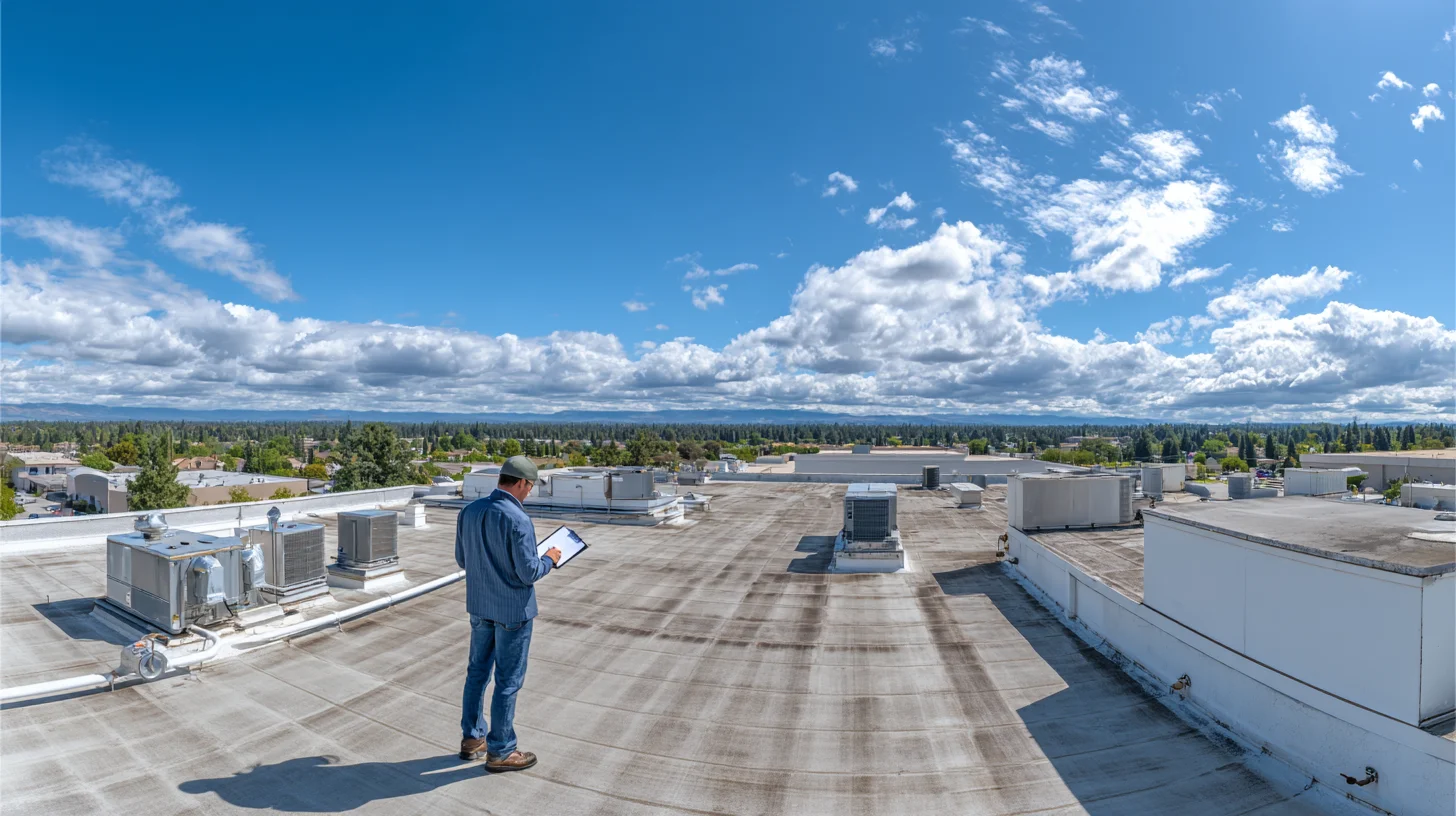
Professional roofing contractors conduct thorough inspections that examine all critical roof components, including membrane condition, seam integrity, flashing performance, penetration seals, drainage systems, and equipment supports. These inspections follow industry standards established by organizations like the National Roofing Contractors Association (NRCA), which recommends semi-annual inspections for most commercial facilities. Property managers receive detailed reports documenting current conditions, identifying developing issues, and providing photographic evidence of problem areas. This documentation creates a historical record of roof performance that proves invaluable when planning repairs, budgeting for replacement, or filing warranty claims. Scheduled inspections also satisfy many manufacturer warranty requirements that mandate regular professional examination of installed systems.
Drain and Scupper Cleaning
Drainage system maintenance represents one of the most critical and cost-effective services provided through maintenance programs. Contractors remove debris from drains, scuppers, gutters, and overflow systems to ensure water flows freely from roof surfaces. They inspect drain assemblies for proper securement, check for deteriorating sealants, and verify that overflow drains function correctly. Clean drainage systems prevent ponding water conditions that stress roof structures, create leak risks, and void many manufacturer warranties. Property managers benefit from knowing their drainage infrastructure receives regular attention rather than waiting for water accumulation problems to emerge during heavy rainfall events.
Minor Repairs and Sealing
Maintenance programs address small issues before they become major problems. Contractors perform minor repairs such as sealing open seams, replacing damaged flashings, securing loose penetration boots, and reattaching separated membrane edges. These proactive repairs prevent water intrusion, extend membrane life, and maintain the roof’s ability to protect building interiors. The cost of addressing minor issues during scheduled maintenance visits is substantially lower than emergency repair costs, which often include water damage remediation, business interruption, and expedited service charges. Property managers who invest in preventative repairs avoid the cascading failures that occur when small problems go unaddressed until they cause significant damage.
Maintenance vs Reactive Roof Repairs
The financial and operational differences between proactive maintenance and reactive repair approaches are substantial. Property managers who understand these distinctions make more informed decisions about roof care investments and long-term building protection strategies.
Cost Comparison
Commercial roof maintenance programs typically cost between $0.15 and $0.40 per square foot annually, depending on roof size, condition, and service frequency. This investment prevents emergency repairs that often cost $500 to $1,500 per visit before addressing the actual problem. A single major leak requiring emergency response, interior damage remediation, and structural repairs can easily exceed $10,000, far surpassing the annual cost of a comprehensive maintenance program. Property managers who budget for maintenance reduce overall roofing expenditures by extending system life, avoiding premature replacement, and preventing the expensive failures that result from neglect. Industry research indicates that properly maintained commercial roofs last 30 to 50 percent longer than unmaintained systems, representing significant capital preservation over the building’s ownership period.
Business Disruption Risks
Emergency roof failures create operational disruptions that maintenance programs help avoid. Water intrusion damages inventory, interrupts business operations, forces temporary closures, and creates liability concerns when customers or employees are affected. Reactive repairs often require immediate action during business hours, creating noise, safety concerns, and access limitations that scheduled maintenance visits can accommodate more efficiently. Property managers who implement maintenance programs coordinate roof work during optimal times, minimizing tenant impact and maintaining normal business operations. This scheduling flexibility is impossible when emergency repairs demand immediate attention regardless of business needs or operational considerations.
Maintenance Needs by Roof Type
Different commercial roofing systems require specific maintenance approaches based on their materials, installation methods, and performance characteristics. Property managers benefit from understanding these system-specific requirements when developing maintenance strategies.
TPO & PVC Systems
Thermoplastic single-ply membranes like TPO and PVC represent the most common commercial roofing systems in Modesto. These mechanically attached or fully adhered systems require regular inspection of heat-welded seams, which can separate if installation quality was compromised or if extreme thermal cycling stresses the material. Maintenance programs monitor seam integrity, verify that membrane reflectivity meets Title 24 compliance standards, and check penetration details where pipes, vents, and equipment pass through the roof. Proper maintenance preserves manufacturer warranties, which typically require documented professional care as a condition of coverage. TPO and PVC warranty requirements often specify cleaning schedules, inspection frequencies, and repair protocols that maintenance programs fulfill systematically.
Modified Bitumen & BUR
Modified bitumen and built-up roofing systems use multiple layers of asphalt-based materials that require different maintenance attention than single-ply membranes. These systems benefit from surface inspections that identify blistering, cracking, or alligatoring conditions indicating membrane aging. Granule loss on cap sheets signals UV degradation that may require coating application to extend system life. Maintenance contractors examine seam integrity, check flashing conditions, and verify that surface drainage patterns have not changed due to structural deflection or insulation settlement. Built-up systems often show localized problems that can be addressed through targeted repairs rather than full replacement if identified early through regular maintenance inspections.
How Often Commercial Roofs Should Be Maintained
Maintenance frequency depends on multiple factors including roof age, condition, type, building use, and regional climate conditions. Property managers work with professional roofing contractors to establish schedules that provide optimal protection while managing program costs effectively.
Annual vs Semi-Annual Programs
Most commercial buildings benefit from semi-annual maintenance programs that include spring and fall inspections with cleaning and minor repairs as needed. Spring inspections prepare roofs for summer heat and verify that winter weather did not cause damage requiring attention. Fall inspections clean drainage systems before winter rainfall and address any heat-related deterioration from summer exposure. Buildings with newer roofs in good condition may function adequately with annual maintenance, particularly if regular visual checks by facility staff supplement professional inspections. However, the incremental cost of semi-annual service is typically justified by the additional protection and earlier problem detection it provides.
High-Risk Buildings
Certain facilities require more frequent maintenance attention due to operational characteristics, roof conditions, or business criticality. Restaurants, manufacturing facilities, and other buildings with significant rooftop equipment generate more maintenance needs through equipment vibration, exhaust exposure, and foot traffic. Older roofs nearing the end of their service life benefit from quarterly inspections that catch developing problems before they become emergencies. Critical facilities such as data centers, healthcare facilities, or cold storage warehouses cannot tolerate water intrusion and justify intensive maintenance programs that minimize failure risk. Property managers assess these building-specific factors when determining appropriate maintenance frequencies for their portfolios.
Documentation, Reports, and Budget Planning
Professional maintenance programs generate detailed documentation that supports property management functions beyond roof care. These reports provide the information needed for capital planning, warranty claims, and stakeholder communication.
Using Reports to Forecast Costs
Comprehensive maintenance reports document current roof conditions, identify developing issues, estimate remaining service life, and provide repair or replacement cost projections. Property managers use this information to forecast capital needs accurately, schedule major work during optimal timeframes, and allocate budgets appropriately across multiple properties. Reports that track roof condition changes over time reveal deterioration rates that inform replacement timing decisions. Photographic documentation provides visual evidence supporting budget requests and helps non-technical stakeholders understand roof condition realities. This planning capability prevents surprise failures that require unbudgeted emergency expenditures and allows property managers to secure competitive bids for planned work rather than accepting premium pricing for urgent repairs.
Choosing the Right Roofing Contractor for Ongoing Maintenance
Selecting a qualified contractor for maintenance services requires evaluation of multiple factors beyond pricing. Property managers benefit from partnering with licensed, experienced contractors who understand local climate challenges and maintain proper insurance coverage.
Licensed contractors operating under California Lic#1130391 demonstrate compliance with state requirements and possess the training necessary to perform roof work safely and effectively. Experience with Modesto-area commercial buildings ensures contractors understand regional climate impacts and common failure modes affecting Central Valley roofs. Proper insurance coverage protects property owners from liability if worker injuries or property damage occur during maintenance activities. OSHA fall protection compliance is mandatory for commercial roofing work, and contractors should demonstrate safety program implementation and worker training documentation. Property managers verify these qualifications before signing maintenance agreements to ensure they partner with contractors capable of delivering professional service consistently over multi-year relationships.
FAQs
How much does a commercial roof maintenance program cost?
Commercial roof maintenance programs typically cost between $0.15 and $0.40 per square foot annually, depending on factors including roof size, condition, system type, and service frequency. A 20,000 square foot building might pay $3,000 to $8,000 per year for comprehensive semi-annual service including inspections, cleaning, minor repairs, and detailed reporting. This investment is substantially lower than the cost of emergency repairs or premature roof replacement resulting from neglect. Property managers should request detailed proposals that specify inspection frequency, services included, response times for issues discovered, and reporting formats to compare programs accurately across different contractors.
Can maintenance prevent roof replacement?
Properly implemented maintenance programs can extend commercial roof service life by 30 to 50 percent compared to unmaintained systems, potentially delaying replacement by years or even decades. However, maintenance cannot prevent replacement indefinitely. Every roofing system eventually reaches the end of its serviceable life due to cumulative UV exposure, thermal cycling, and material aging that maintenance cannot reverse. The goal of maintenance is maximizing return on the original roof investment, maintaining warranty coverage, preventing premature failure, and providing accurate replacement timing information rather than claiming maintenance eliminates the eventual need for replacement. Property managers who invest in maintenance throughout the roof’s life cycle achieve optimal financial performance from their roofing assets.
Is maintenance required for roof warranties?
Most commercial roofing manufacturer warranties require documented professional maintenance as a condition of coverage. Warranty documents specify minimum inspection frequencies, required documentation formats, and response timeframes for addressing identified issues. Property managers who fail to maintain proper documentation or skip required inspections may void warranty coverage even if the roof failure results from manufacturing defects. Contractors providing maintenance services should be familiar with specific warranty requirements for installed systems and structure maintenance programs to satisfy these obligations. Regular maintenance not only preserves warranty coverage but also creates the documentation needed to file successful claims if manufacturing defects do occur during the warranty period.
What buildings benefit most from maintenance?
All commercial buildings benefit from roof maintenance, but certain property types realize particularly significant advantages. Large warehouse and distribution facilities with extensive roof areas and minimal parapet protection face high wind uplift risks that maintenance programs address through regular fastener inspection and membrane securement verification. Multi-tenant retail and office buildings cannot tolerate tenant disruption from roof leaks, making maintenance programs essential for maintaining occupancy and avoiding liability issues. Buildings with expensive interior improvements, sensitive equipment, or inventory face catastrophic losses from water intrusion that maintenance helps prevent. Older buildings approaching the typical roof replacement cycle benefit tremendously from maintenance that extends remaining service life and delays major capital expenditures.
When should maintenance start on a new roof?
Commercial roof maintenance should begin immediately after new roof installation or replacement is complete. The first year after installation represents a critical period when workmanship issues, material defects, or installation errors may become apparent. Early maintenance catches these problems while contractor and manufacturer warranties provide maximum coverage. Starting maintenance early also establishes baseline documentation of roof condition that proves valuable for future comparisons and long-term planning. Many manufacturer warranties require first-year inspections as a condition of coverage, making immediate maintenance enrollment essential for preserving warranty benefits. Property managers who delay maintenance risk discovering problems after warranty periods expire or missing the documentation requirements that support successful warranty claims.
Conclusion
Commercial roof maintenance programs provide Modesto and Tracy property managers with cost-effective protection against the Central Valley’s challenging climate conditions. Proactive maintenance extends roof service life, preserves warranty coverage, prevents emergency repairs, and generates the documentation needed for accurate capital planning and stakeholder communication. Property managers who partner with licensed, experienced contractors implementing comprehensive maintenance strategies protect their buildings while optimizing long-term roofing expenditures across their portfolios. Request a free inspection to evaluate current roof conditions and develop a maintenance program tailored to your property’s specific needs.
For more information about roofing services at Highly Favored Roofing Modesto, check them out below: